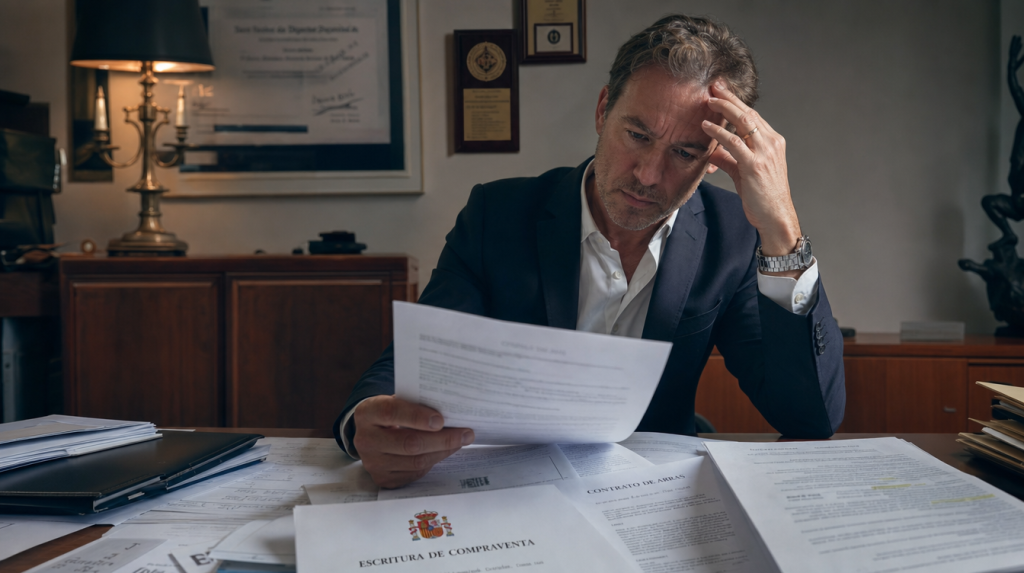

Buying property in Spain without travelling there is not only possible — it is increasingly common among US and international buyers. Thousands of international buyers complete their Spanish property purchase every year entirely remotely, using a legal mechanism called a Power of Attorney.
But buying remotely without the right legal framework in place multiplies every risk. This guide covers exactly how to do it correctly — from appointing a lawyer and obtaining your NIE from abroad, to signing the final deed without setting foot in Spain.
What Is a Power of Attorney in Spain?
A Power of Attorney (Escritura de Poder Notarial) is a legal document that authorises another person — typically your lawyer — to act on your behalf in Spain. For property purchases, it allows your lawyer to sign the final deed (Escritura Pública de Compraventa) before the Spanish notary without you being physically present.
A Power of Attorney for a Spanish property purchase:
— Must be notarised — either by a Spanish notary in Spain, or by a local notary in your country followed by an Apostille stamp
— Can be general (covering all legal acts) or specific (limited to the property transaction)
— Is fully legally valid — the Spanish notary accepts it as equivalent to your personal presence
— Does not give your lawyer unlimited authority — it is limited to the acts specified in the document
For US buyers, the process is straightforward: your Spanish lawyer sends you the Power of Attorney document, you have it notarised at a US notary and then apostilled at your state's Secretary of State office, and return it to Spain. Your lawyer then handles everything from there.
Step-by-Step: How to Buy Property in Spain Remotely
The remote purchase process follows the same legal sequence as an in-person purchase — with your lawyer acting on your behalf at every stage that requires physical presence in Spain.
Step 1 — Appoint a lawyer before anything else Your lawyer is your eyes, ears, and legal representative in Spain. Appoint them before you make any financial commitment — including the reservation deposit. They will conduct due diligence, review contracts, and ultimately sign the deed on your behalf.
Step 2 — Obtain your NIE from abroad The NIE (Número de Identificación de Extranjero) is required for all property transactions in Spain. From the US, apply at a Spanish consulate — allow 4–8 weeks. Alternatively, grant your lawyer a Power of Attorney to apply on your behalf in Spain, which is typically faster.
Step 3 — Open a Spanish bank account Required for paying purchase taxes and ongoing property costs. Most major Spanish banks open non-resident accounts remotely or through their international divisions. Your lawyer can advise on the best option for your situation.
Step 4 — Due diligence Your lawyer conducts the full legal investigation of the property — title verification, debt checks, planning permissions, cadastral records, community charges. You receive a written report in English with findings and recommendations before any binding commitment.
Step 5 — Review and sign the Contrato de Arras Your lawyer reviews the reservation contract and negotiates any necessary changes before you sign. The arras can be signed remotely — either electronically or by courier — once your lawyer confirms it is safe to proceed.
Step 6 — Execute the Power of Attorney Once due diligence is complete and you are ready to proceed, your lawyer sends you the Power of Attorney document. You have it notarised locally and apostilled, then return it to Spain.
Step 7 — Completion Your lawyer signs the final deed before the Spanish notary on your behalf, pays the applicable taxes, and handles land registry registration. You receive the completed deed and title confirmation by courier or digital copy.
What Can Go Wrong When Buying Remotely — And How to Prevent It
Remote buyers face all the same risks as in-person buyers — plus several additional ones that are unique to purchasing from abroad.
Fraudulent listings and sellers Properties that do not exist, are misrepresented, or are being sold by someone without legal title. Remote buyers are more vulnerable because they cannot visit the property or meet the seller in person. Your lawyer verifies ownership through the Land Registry before any money changes hands.
Payment fraud A growing threat: scammers intercept email communications between buyer and lawyer, substituting fraudulent bank account details for the seller's or notary's real accounts. Never transfer funds based on email instructions alone — always verify account details by phone directly with your lawyer before any transfer.
Pressure to sign quickly Agents and sellers sometimes pressure remote buyers to sign the arras quickly before due diligence is complete, claiming another buyer is interested. A competent lawyer will protect you from this pressure — no client of ours signs anything before we have reviewed it.
Currency risk The exchange rate between USD and EUR fluctuates. A purchase price agreed in euros can cost significantly more or less in dollars by the time you complete. Consider a forward contract with a currency specialist to lock in a rate.
Missing the completion date NIE delays, Power of Attorney apostille processing, or bank transfer timing issues can all delay completion. Your lawyer should build sufficient buffer into the timeline and manage all moving parts proactively.
Specific Considerations for US Buyers Purchasing Remotely
US citizens face several additional considerations when buying Spanish property remotely that European buyers do not.
NIE processing time from the US
Spanish consulates in the US — New York, Los Angeles, Miami, Chicago, Houston — process NIE applications but wait times vary significantly. Allow a minimum of 4–8 weeks. Your lawyer can apply on your behalf in Spain using a Power of Attorney, which is often faster and removes the consulate appointment requirement entirely.
Apostille for the Power of Attorney
A Power of Attorney signed before a US notary must be apostilled before it is valid in Spain. Each US state has its own apostille process through the Secretary of State's office. Allow 1–2 weeks for apostille processing, longer in states with backlogs.
US tax obligations triggered by the purchase
Buying property in Spain triggers potential US reporting obligations regardless of where you are when you sign the purchase deed. Opening a Spanish bank account for the transaction may trigger FBAR reporting obligations if the balance exceeds $10,000. If the property is held through a foreign entity rather than in your own name, FATCA reporting may also apply.
Coordinate with your US tax advisor before completing the purchase to ensure all reporting obligations are identified in advance — not after the fact.
Wire transfer logistics
Transferring large sums internationally requires advance planning. Spanish banks typically require wire transfers to arrive 24–48 hours before the notary signing. Work with your lawyer to establish the exact amounts, timing, and verified account details well in advance of completion.
Time zone differences
Spain is 6–9 hours ahead of US time zones. Notary appointments, bank confirmations, and urgent communications may require you to be available outside normal US business hours. Factor this into your planning and ensure your lawyer knows your availability and contact preferences.